


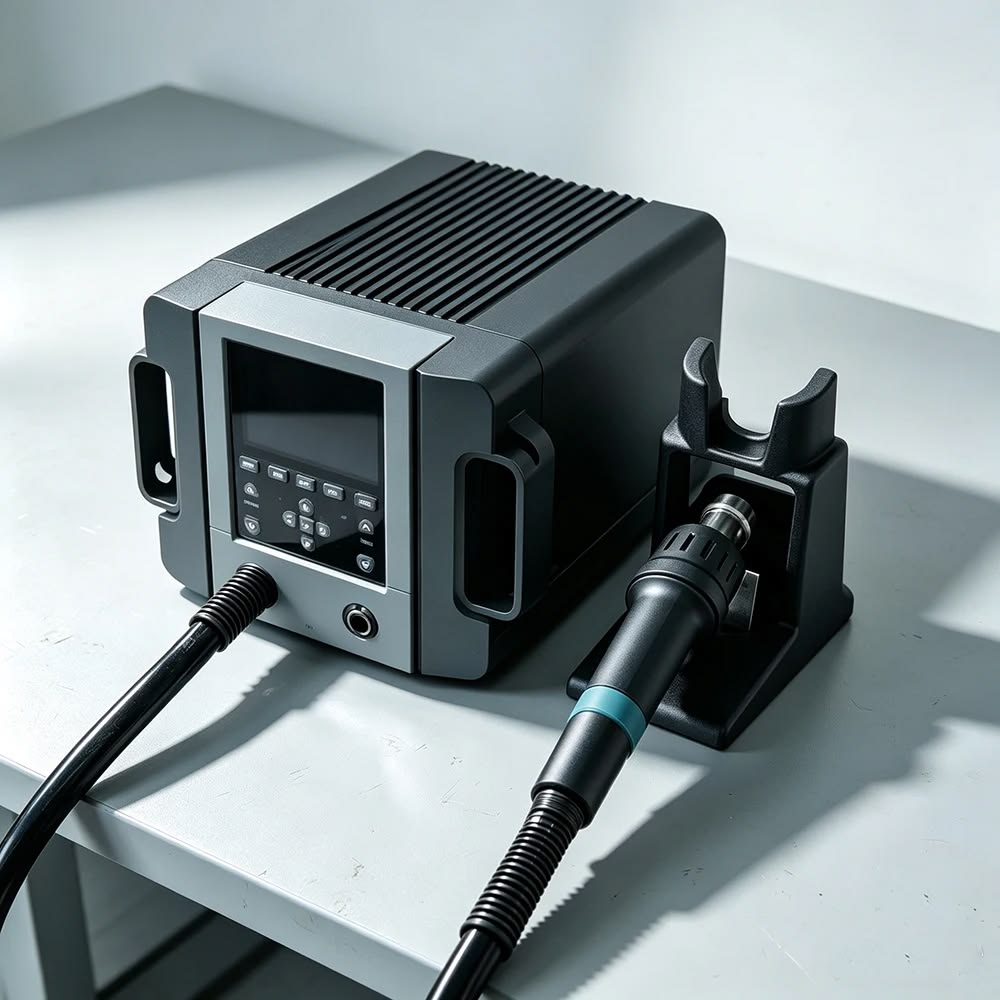
Choosing the right hot air rework station for mobile phone repair is important for technicians who work with smartphone motherboards, SMD components, ICs, connectors, and other delicate electronic parts. A good hot air rework station provides controlled heat and airflow, making it easier to remove and install small components without unnecessarily damaging the PCB.
With many models available, choosing the right equipment can be confusing, especially for beginners. Temperature range, airflow control, heating performance, nozzle options, power, stability, and safety are some of the important factors to consider.
This guide explains what to look for when selecting a hot air rework station for mobile phone repair.
What Is a Hot Air Rework Station?
A hot air rework station is an electronic repair tool that produces controlled heated airflow. Unlike a traditional soldering iron, it heats components without requiring direct contact with the component using a metal tip.
Hot air rework stations are commonly used for:
- Removing and installing SMD components
- IC replacement
- Connector replacement
- PCB repair
- Removing solder from circuit boards
- Reworking small electronic components
- Chip-level mobile phone repair
For smartphone motherboard repair, controlled heat is especially important because mobile PCBs contain very small components placed close together.
Why Is a Hot Air Rework Station Important for Mobile Repair?
Modern smartphones use compact PCBs with densely packed components. Traditional soldering methods may not be suitable for every repair.
A quality hot air station allows technicians to control the temperature and airflow according to the component and repair task.
This can improve precision and reduce the risk of unnecessary heat exposure to nearby components.
Key Factors to Consider When Choosing a Hot Air Rework Station
1. Temperature Control
Temperature control is one of the most important features of a hot air rework station for mobile phone repair.
Different components and soldering applications require different heat levels. A station with adjustable temperature allows technicians to select an appropriate setting for the task.
Look for a model that provides:
- Adjustable temperature
- Stable temperature output
- Easy-to-read display
- Fast heating
- Consistent heat delivery
Precise temperature control is particularly useful when working with small motherboard components.
2. Airflow Control
Temperature is only one part of hot air rework.
Airflow also needs to be controlled carefully. Excessive airflow can move small components or spread heat to nearby areas of the PCB.
A good hot air station should provide adjustable airflow so technicians can select an appropriate level for different jobs.
Lower airflow can be useful for delicate components, while higher airflow may be suitable for certain larger components and applications.
3. Power Rating
The power rating of a hot air station affects how quickly it can heat up and recover temperature during use.
For mobile phone repair, the required power depends on the type of work being performed.
A technician who mainly works on small smartphone components may have different requirements from someone who also repairs larger PCBs.
Choose a station that provides sufficient power while still offering precise control.
4. Nozzle Options
Hot air rework stations often come with interchangeable nozzles.
Different nozzle sizes and shapes can help technicians direct heated air toward specific areas.
Useful nozzle options can include:
- Small round nozzles
- Medium nozzles
- Larger nozzles
- Special-shaped nozzles
For mobile motherboard repair, smaller nozzles can help concentrate heat around individual components.
Having multiple nozzle options makes the station more versatile.
5. Temperature Stability
A station should not only reach the selected temperature but also maintain it consistently during operation.
Poor temperature stability can make rework more difficult and increase the possibility of overheating components.
A reliable station should provide stable heat during continuous use.
6. Heating Speed
Fast heating can improve workflow, especially in a busy mobile repair workshop.
A station that reaches the required temperature quickly reduces waiting time between repairs.
However, heating speed should not be considered separately from temperature control and stability. A good balance between speed and precision is more important than heating speed alone.
7. Digital Display
A digital display makes it easier to monitor temperature and airflow settings.
Technicians can quickly see the selected temperature and adjust it when required.
Some models also include additional controls or memory functions that make frequently used settings easier to access.
8. Handle Design
The hot air handle should be comfortable and easy to control.
A lightweight handle can reduce fatigue during longer repair sessions. Good insulation and a suitable grip can also improve handling.
The cable connecting the handle to the station should provide enough flexibility for comfortable movement around the workbench.
9. ESD Safety
Electrostatic discharge can damage sensitive electronic components.
When working with smartphone motherboards, technicians should use appropriate ESD protection and select equipment designed for safe electronics repair where applicable.
An ESD-safe workstation should ideally include proper grounding and other protective measures.
10. Build Quality
A hot air rework station is a workshop tool that may be used frequently. Good build quality can therefore be an important consideration.
Check the quality of:
- Control buttons
- Display
- Handle
- Heating element
- Air pump or fan system
- Nozzles
- Cable
- Workstation housing
A durable station can be a useful long-term investment for a repair business.
Hot Air Rework Station vs Soldering Station
A hot air rework station and a soldering station perform different functions.
A soldering station uses a heated tip to transfer heat directly to solder and components.
A hot air rework station uses heated airflow to heat a larger area without direct contact.
For mobile repair, technicians may need both tools because different repair tasks require different techniques.
For example:
Soldering station:
Useful for precision soldering, wire work, jumper work, and certain component connections.
Hot air rework station:
Useful for SMD components, IC work, connector removal, and other board-level rework tasks.
Having both tools can provide greater flexibility in a professional repair environment.
Common Applications of a Hot Air Rework Station
A hot air rework station for mobile phone repair can be used for many board-level tasks.
SMD Component Removal
Small surface-mount components can be removed using controlled heat and airflow.
IC Rework
Hot air can be used during certain IC removal and rework procedures, depending on the component and board design.
Connector Replacement
Some motherboard connectors and charging-related components may require controlled hot air during removal or installation.
Solder Rework
Hot air can help technicians reflow or rework solder on suitable PCB components.
Chip-Level Repair
Technicians performing advanced motherboard repairs may use hot air equipment alongside microscopes, soldering stations, and other diagnostic tools.
Mistakes to Avoid When Using a Hot Air Station
Even a good station can cause damage if it is used incorrectly.
Using Excessive Temperature
Too much heat can damage components, PCB layers, connectors, or nearby parts.
Always use an appropriate temperature for the task and component.
Using Excessive Airflow
High airflow can move small components away from their original positions.
Use controlled airflow, particularly around small SMD components.
Heating One Area for Too Long
Keeping hot air focused on one location for too long can damage the board.
Use controlled and appropriate heating techniques.
Ignoring Nearby Components
Heat can spread beyond the target component.
Technicians should be aware of surrounding components and protect sensitive areas when appropriate.
Working Without Proper Training
Hot air rework requires practice and technique. Beginners should learn on suitable training boards before attempting difficult repairs on expensive smartphones.
How to Maintain a Hot Air Rework Station
Proper maintenance can help keep the equipment working reliably.
Regularly check:
- Nozzles
- Heating element
- Airflow system
- Handle
- Power cable
- Display and controls
Keep the equipment clean and follow the manufacturer’s maintenance recommendations.
Avoid blocking ventilation openings and store nozzles and accessories properly when they are not being used.
Choosing a Hot Air Rework Station Based on Your Needs
There is no single hot air station that is ideal for every technician.
For Beginners
A beginner may prefer a simple model with:
- Adjustable temperature
- Adjustable airflow
- Digital display
- Multiple nozzles
- Easy controls
For Professional Repair Shops
A professional workshop may need:
- Higher durability
- Stable temperature control
- Precise airflow adjustment
- Reliable heating performance
- Multiple nozzle options
- ESD protection
- Easy maintenance
For Advanced Board-Level Repair
Technicians working on chip-level repairs may prioritize precise temperature control, stable airflow, high-quality heating performance, and compatibility with their existing repair setup.
Where to Buy Mobile Repair Tools
When purchasing a hot air rework station for mobile phone repair, consider the product specifications, compatibility, warranty, availability of replacement parts, and support.
Mtools provides mobile repair tools and equipment for technicians, repair workshops, and professionals working with smartphones and electronic devices.
Before purchasing, compare the specifications of different models and choose equipment that matches your repair requirements and experience level.
Conclusion
Choosing the right hot air rework station for mobile phone repair can make board-level work more controlled and efficient. Important factors include temperature control, airflow adjustment, power, nozzle options, heating stability, build quality, handle design, and safety features.
A hot air station should be selected according to the type of repair work you perform. Beginners should focus on ease of use and precise control, while professional technicians may require more advanced features and greater durability.
Used correctly alongside a soldering station, microscope, multimeter, and other mobile repair tools, a quality hot air rework station can become an important part of a professional smartphone repair workstation.